
Are you fond of keeping pets at home but suffer from severe allergies to animals, which makes you worried and often wonder which dogs are hypoallergenic and which are not?
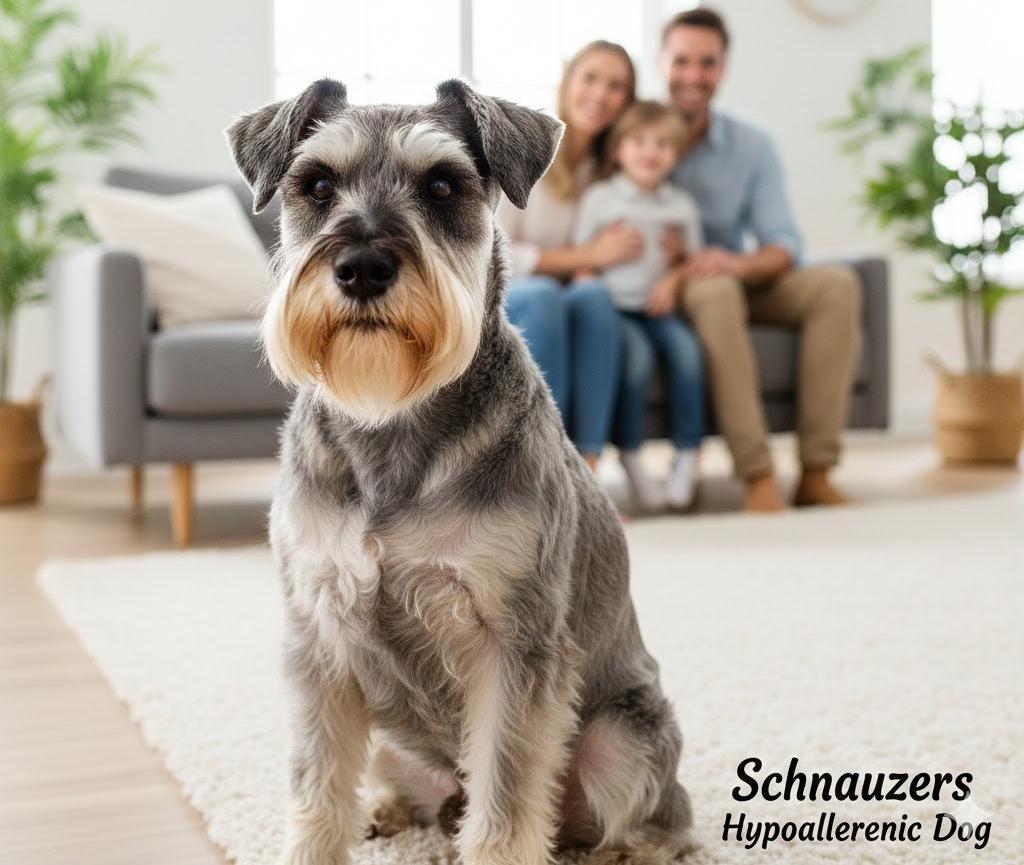
And if you’re thinking about a Schnauzer,
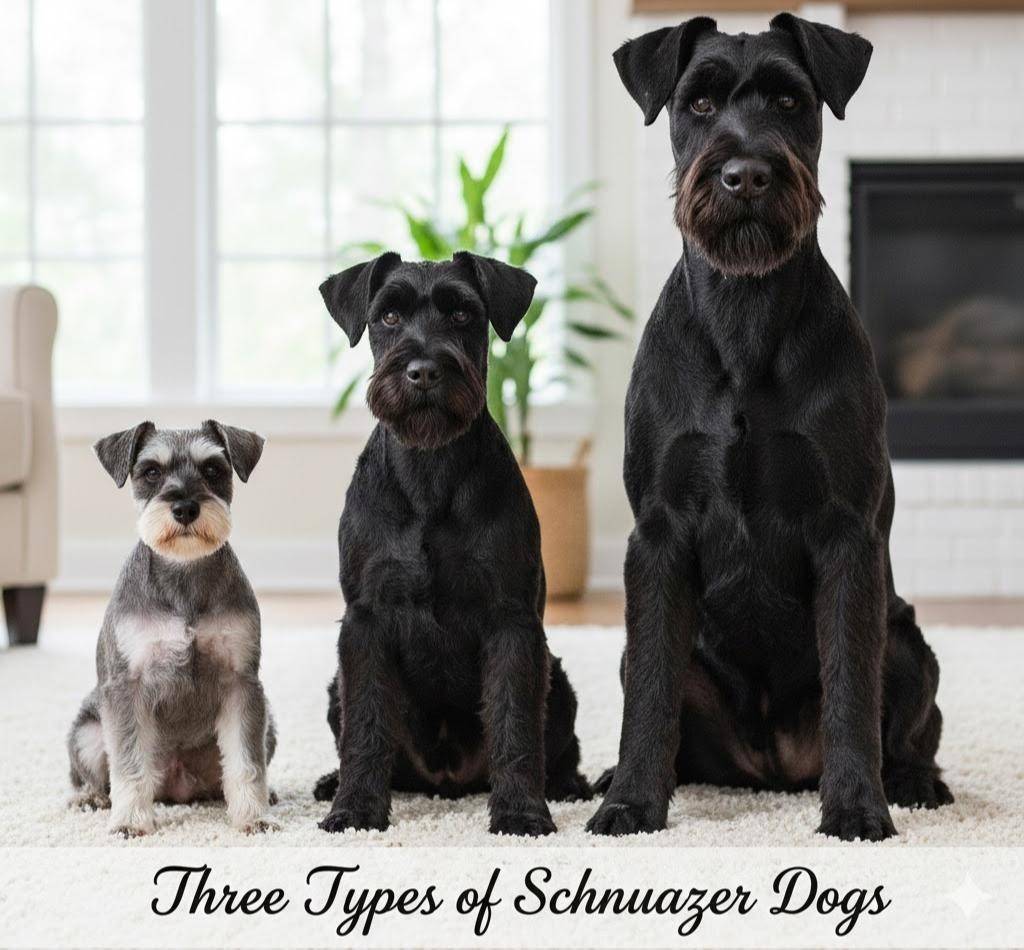
There are three different breeds of schnauzers: miniature, standard, and giant.
Each of the three Schnauzer types suits allergy sufferers differently, depending on the severity of their allergies.
Let’s take a look at this breed’s characteristics and learn some more interesting facts about it.
How hypoallergenic are Schnauzers?
All three Schnauzer breeds were made for different purposes, and each can suit allergy sufferers in its own way.
Let’s know:
1: Miniature schnauzer
It’s a small-sized dog with a quick and lively body. It was bred to catch rats. This breed became popular in Europe in the early 19th century. It weighs about 11 to 20 pounds. Its beard hangs down under its mouth, and its eyebrows grow over its eyes in a curved shape.
Miniature Schnauzers shed very little hair, and their fur is hard and curly, which keeps most of the dander inside. This means less dander spreads around, so people with allergies are less likely to have a reaction. Regular grooming and brushing make allergies even less likely. But like all dogs, their fur, saliva, and urine have proteins that can cause allergies in some people. So even people with strong allergies might still have a small reaction.
So if you’re looking for a breed that doesn’t need much maintenance and sheds very little, a Miniature Schnauzer can be a great choice for you.
2: Standard schnauzers
The Standard Schnauzer is a medium-sized dog that is good for many jobs. It weighs about 30 to 45 pounds. It was originally bred to take care of farm animals and catch rats. This dog is alert and protective, making it a great helper on farms.
It sheds some hair, but less than most dogs, though more than a Miniature Schnauzer. Its fur is hard and curly, which keeps most of the dander inside, so people with allergies have fewer problems. Regular grooming can make allergies even less likely. However, people with very strong allergies might still have a small reaction.
3: Giant schnauzers
The Giant Schnauzer is a big and strong dog. It weighs about 55 to 90 pounds. It’s a larger version of the Standard Schnauzer and was developed in Europe in the middle of the 19th century. Its main job was to protect farms and homes; it’s used for protection and police work.
Compared to Miniature and Standard Schnauzers, it sheds more hair, which can cause allergies. Its fur is hard and curly, which keeps most of the dander inside. This helps reduce the chance of allergies a little.
In short, the miniature is best for people with more allergies, the standard for people with medium allergies, and the giant for people with fewer allergies; and with regular grooming, they are easier to manage.
What Causes people allergies in Schnauzer
Some reports have shown that people with pet allergies react less to certain Schnauzer breeds.
Dr. Alison Harper, Veterinary Allergy Specialist, says no dog is completely hypoallergenic, but some breeds are less likely to trigger allergies.
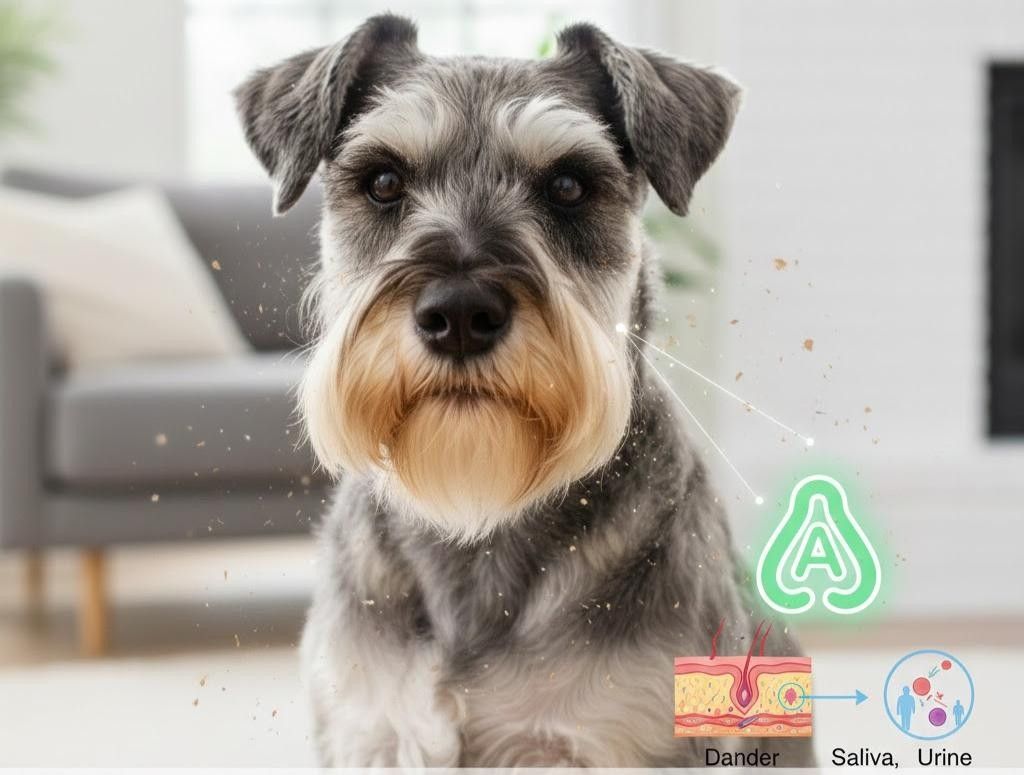
Schnauzer dander is a major cause of allergies in humans. It’s made up of tiny flakes of skin that can float in the air and enter the eyes, ears, and respiratory tract, causing asthma symptoms.
Dr. Robert Clark, Allergy Consultant, says most allergic reactions in humans happen because of dander, which is tiny flakes of a dog’s skin.
Schnauzers that shed more hair leave more dander, and dogs that shed less hair leave less dander.
Andrea Johnson, pet researcher, says
If a dog does not shed much hair, it usually means it also leaves less dander, which lowers the chances of allergies.
Schnauzer allergies can be caused by pollen, saliva, and urine. Schnauzer love rolling in grass, so their fur can pick up pollen and other allergens. When they shake, these tiny particles go into the air and cause allergies.
Schnauzer’ saliva has proteins that can make humans sneeze, have a runny nose, or feel stuffy. Urine also has proteins that can trigger allergies. Small particles from urine can stay on their fur and spread into the air, causing allergic reactions.
Dr. Robert Clark says a dog’s saliva, urine, and hair can all cause allergies, so just focusing on hair shedding is not enough.
Typical Signs of Allergies in people from Schnauzers
One person’s allergic reaction to Schnauzers can be different from another person’s. Some people are more sensitive to allergies, and some people are less.
Some basic allergy signs are given below:
- Itchy eyes
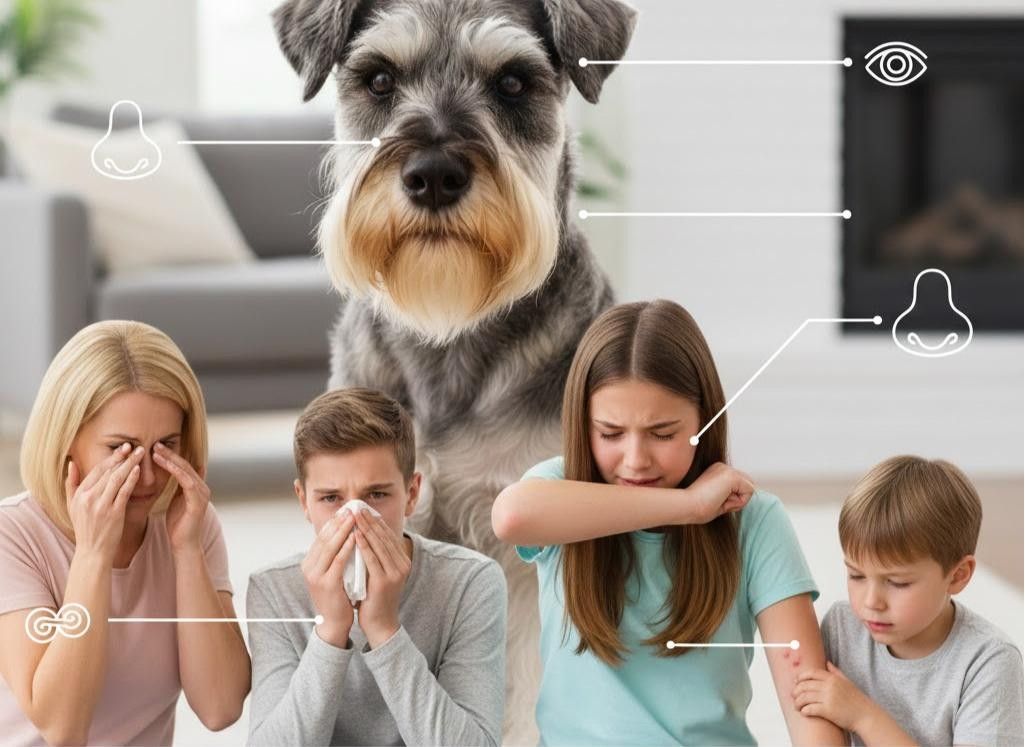
If dander gets on your eyelids or eyes, it can cause irritation. If you touch a Schnauzer and then rub your eyes without washing your hands, your eyes can become red and swollen.
- Stuffy or runny nose
If dander gets inside or around your nose, it can cause irritation. Sometimes your nose may run or feel blocked. All of this happens as a reaction to the allergy.
- Headache
If allergy symptoms like itchy eyes, runny nose, coughing, or sneezing start, you may get a headache. This happens because more blood is sent to your eyes, nose, and head.
- Asthma, coughing, or sneezing
When dander spreads in the air, it can reach the lungs when you breathe, causing coughing and sneezing. If the problem becomes severe, it can trigger asthma.
- Allergic dermatitis (skin allergy)
Often, dander and other allergens can cause itchy skin, redness, or eczema.
- Sore or itchy throat
When airborne dander and allergens pass through your throat while breathing, they can cause irritation, scratching, or a dry throat.
- Chest tightness or difficulty breathing
When dander and other allergens travel down your throat to your chest while you breathe, it can make breathing difficult and create a feeling of tightness in your chest.
- Small bumps or rashes on the skin
Allergens can cause small bumps or rashes on the skin.
- Swelling of the eyes or face
Sometimes, severe allergies can cause swelling of the eyes or face.
- Nausea or weakness
If the allergy becomes severe, you may feel nausea or physical weakness.
Also Read: Are Shih Tzus Hypoallergenic Dogs?
Living Comfortably with a Schnauzer Dog Despite Allergies
Just because you are allergic to Schnauzer dogs does not mean you cannot have one. You can live with a Schnauzer even if you have allergies. But if your allergies are very strong and make you sick, you might have to give up your Schnauzer. Here are some easy tips to help make allergies less severe.
1: Regular dog care
It’s very important to take care of your schnauzer properly. If you don’t groom your schnauzer well, it can cause more allergies. Try to keep your schnauzer’s hair short, but remember that their fur keeps them warm in winter and at night. Always ask a veterinarian or a professional dog groomer for advice. Bathe your dog every two or three weeks and brush their fur every day.
2: Keep your schnauzer outside
If your schnauzer likes to go outside, take them out often. Give them a doghouse and good food so they stay healthy. Spend time with your Schnauzer because they love being with their family. The more they play outside, the less allergy dust will be in your home.
3: Set boundaries
Give your Schnauzer their own place. Keep them in certain areas and try not to let them into the bedroom; this’ll help you stay safe from allergies while you sleep. Keep your dog’s bed, food, and toys in one place, and wash its bed, blankets, and toys at least once a week to keep the dust and hair away.
4: Allergy medicine
If your allergies are small, you can take an allergy pill. Make sure the pill does not make you sleepy. If your allergies get worse, it’s better to consult a doctor.
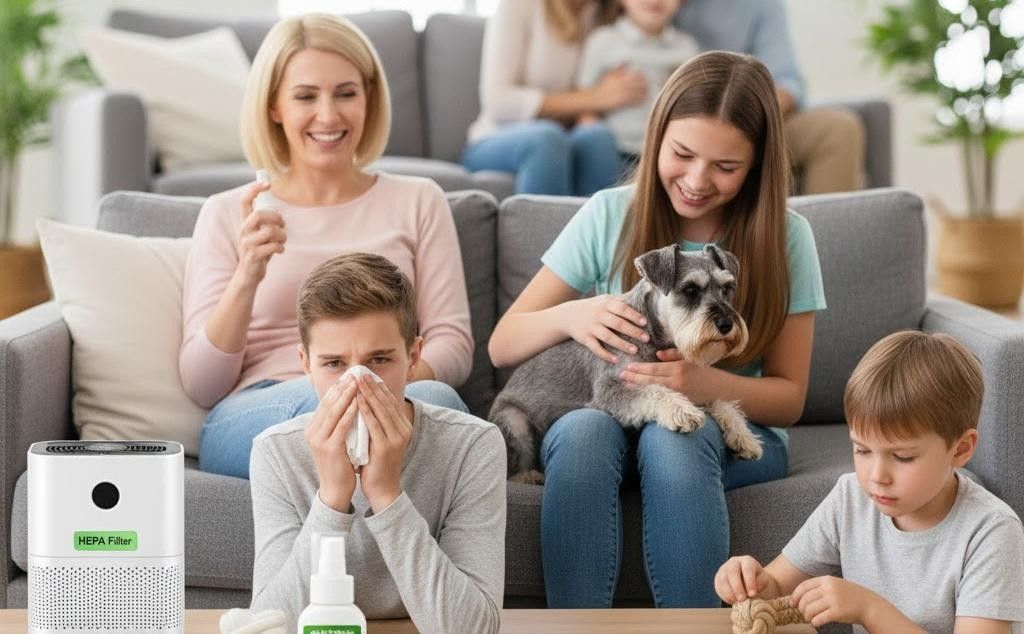
5: Avoid touching your face after touching a dog.
After touching a Schnauzer, wash your hands and arms right away with soap and water so the dog’s hair does not spread.
If your allergies are very bad, you should also change your clothes.
6: Regular house cleaning
Clean your home every day or often. Use a vacuum cleaner. Keep carpets, sofas, curtains, bedsheets, and beds clean because allergy dust stays there. Keep the floor clean too.
7: Air purifier or air filter
Using an air purifier, air filter, or HEPA filter can help make the air cleaner and keep allergy dust away.
8: Regular veterinary check-up
If you want your schnauzer to stay healthy, it’s important to take it to the veterinarian regularly. A healthy dog also causes fewer allergies.
9: Teach children to be careful
Teach children to wash their hands with soap and water after touching the schnauzer. Do not touch your face or eyes before washing, or you might get a bad allergy, and your face may get red.
A good companion by nature
Schnauzers are friendly dogs. They love their owners and are good friends for kids and older people. They like to play with children and keep them safe. Schnauzers are easy to train because they’re happy with their family. They do not cause many allergies. So they’re good for people with allergies.
Health Benefits of Having a Schnauzer
Exercise and Activity
Schnauzers like to play and go for walks. When you play or go for a walk with your schnauzer, it also gives you exercise and is good for your health.
Reduces Stress
When you pet your Schnauzer, hug it, or hold it in your lap, it makes you feel calm and happy. This helps lower your stress levels.
Improves Mood
Schnauzers are friendly and loving. If you keep a Schnauzer as your pet, you will never feel lonely.
Teaches Responsibility
When you take care of your Schnauzer, feed it on time, groom it, and take it for walks. It teaches a sense of responsibility.
Protects Your Home
Schnauzers are alert and watchful. They can warn you if someone is near your home, which gives a feeling of safety.
Encourages Social Time

Walking a Schnauzer can help you meet other dog owners. This helps you make friends and socialize more.
Frequently asked questions
1: Are Schnauzers high maintenance?
Yes, Schnauzers are considered high-maintenance, primarily due to their significant grooming needs (brushing and trimming/stripping every 4-8 weeks), high energy levels requiring daily exercise, and strong personalities that need consistent training to manage their potential stubbornness and vocal nature, making them best suited for active owners.
2: What is the life expectancy of a Schnauzer?
Properly looked after, cared for, and loved, the Miniature and Giant Schnauzer lifespan is 12–15 years. The Standard Schnauzer’s life expectancy is 13–16 years.
3: Do schnauzer dogs bark a lot?
Yes, Schnauzers (especially Miniatures) are known to be vocal and tend to bark a lot.
4: Is a schnauzer a good house dog?
Yes, Schnauzers are generally excellent dogs for the right owner, known for being loyal, smart, and spirited companions.
5: What size schnauzer is best?
A Giant or Standard Schnauzer is a great match for athletic types or large yards for playtime. Schnauzers love being a part of the activity with their people! Miniature Schnauzers are better fits for families that love snuggling as much as they enjoy going out! They’re ideal pets for nearly every type of home.