

I met Emily during a consultation that started like many others. She walked in smiling, but I could see the hesitation behind it. She loved dogs—especially sheep dogs. The fluffy coat, the gentle nature, the way they seem calm and playful at the same time. But Emily also carried tissues in her bag, and that told me a lot before she even spoke.
She asked one question almost immediately: are sheep dogs hypoallergenic?
I hear that question often, and I’ve learned that people usually ask it with hope. Emily was no different. She wanted the answer to be yes. She wanted reassurance that she could bring a sheep dog into her life without worrying about sneezing, itchy eyes, or tightness in her chest.

I explained something I always start with. Dog allergies don’t usually come from fur itself. They come from tiny proteins found in dander, saliva, and skin. When these particles spread through the air, they can trigger reactions—sometimes mild, sometimes severe. The problem with sheep dogs is that their coats are designed to hold onto everything. Dust, pollen, and dander get trapped in that thick hair, and once released, they don’t disappear easily.
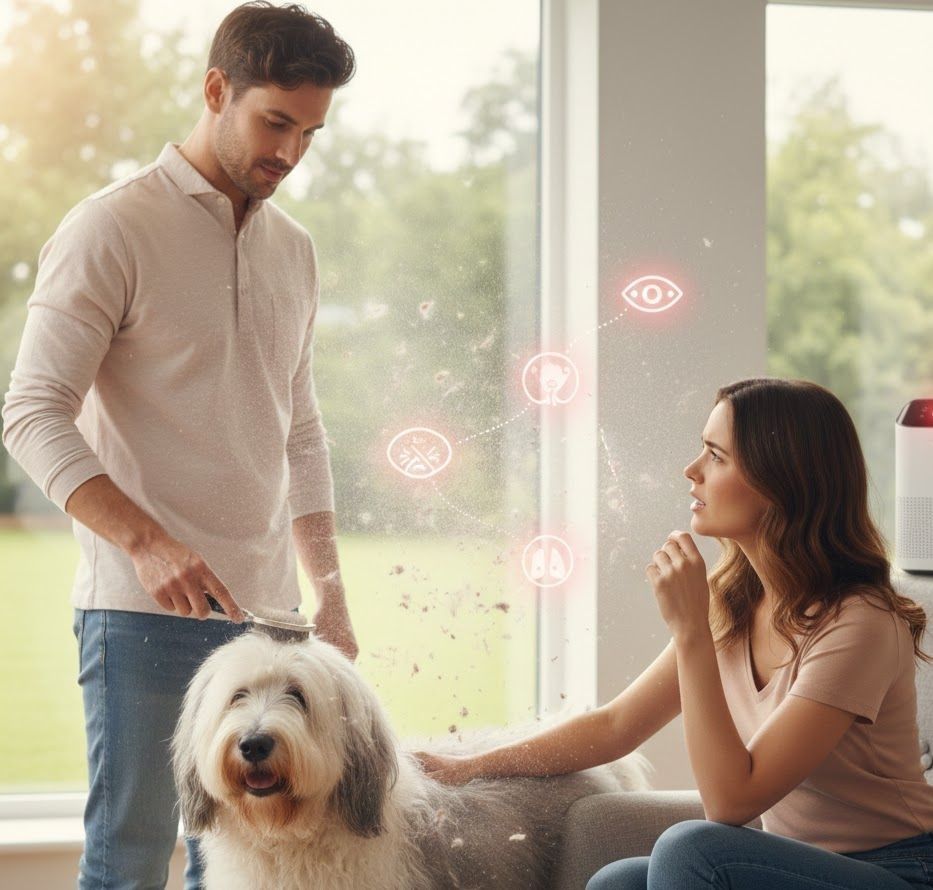
Emily listened carefully as I talked about shedding. Most sheep dogs shed more than people expect. Even when the shedding isn’t obvious, it’s happening. Seasonal coat changes can be intense, and grooming—while essential—often sends allergens into the air rather than removing them. I’ve seen allergy symptoms flare up during brushing sessions more times than I can count.
She told me she had been looking at Old English Sheepdogs online. They seemed perfect for her lifestyle. Calm, affectionate, and great companions. I didn’t sugarcoat my response. From an allergy standpoint, Old English Sheepdogs are one of the more challenging breeds. Their dense coat and high dander production make them a difficult match for anyone with allergies. Even families who clean constantly often struggle.
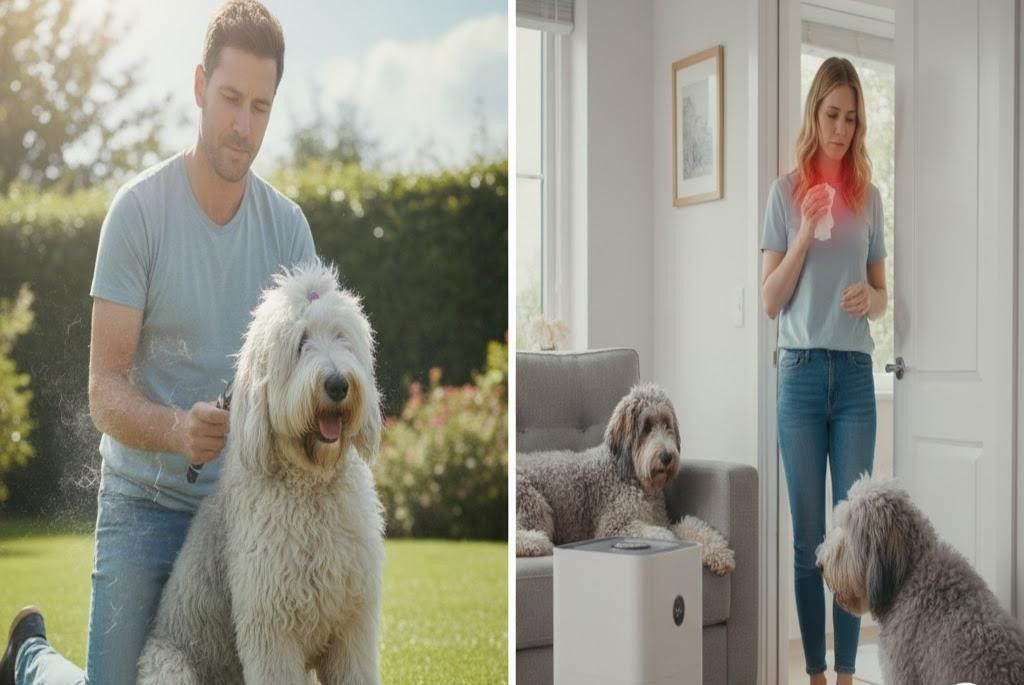
Emily mentioned Sheepadoodles next. She had heard they were hypoallergenic because of the poodle mix. I explained what many people don’t realize. Some Sheepadoodles do inherit a curlier, low-shedding coat. Others don’t. Genetics are unpredictable. I’ve worked with Sheepadoodles that caused no reaction at all—and others that triggered symptoms within minutes. There is no guarantee.
One thing Emily found surprising was learning that long hair isn’t the problem. Short-haired dogs can cause just as many reactions. It’s all about how much allergen the dog produces and how easily it spreads around the home.
She asked if anyone with allergies could live with a sheep dog at all. I told her the truth. People with very mild allergies sometimes manage by grooming outdoors, using air purifiers, and keeping certain rooms dog-free. But for moderate or severe allergies, sheep dogs usually remain a constant trigger, no matter how much effort is put in.
A few weeks later, Emily checked back in. She had spent time around different breeds. When she met dogs known for producing fewer airborne allergens, she noticed something immediately. No sneezing. No itchy eyes. No discomfort. The difference was impossible to ignore.
Emily didn’t end up with a sheep dog. Instead, she chose a breed that fit both her heart and her health. She told me she still admires sheep dogs from afar, and there’s no sadness in her voice when she says it—only relief.
Here: Know About All Hypoallergenic Dog Breeds!
Stories like Emily’s are why I’m always honest about this topic. Sheep dogs are loving, intelligent, and beautiful companions, but they are not hypoallergenic. When allergies are part of the picture, understanding that truth early can prevent years of discomfort and regret.
Helping someone find the right dog isn’t about pushing a breed. It’s about protecting their quality of life. And when someone like Emily can finally enjoy a dog without struggling to breathe or reaching for tissues, I know the right choice was made.